Can't find what you're looking for? Please contact us.

Saving a beloved blueberry farm

7 min read / September 23, 2026 / By Lucy Clark

A 45-year tradition and legacy endures in West Pawlet

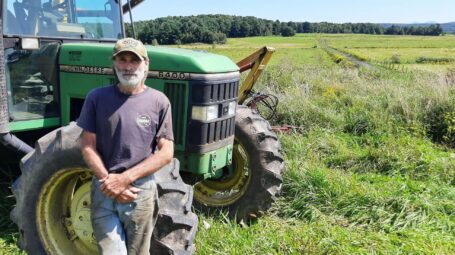
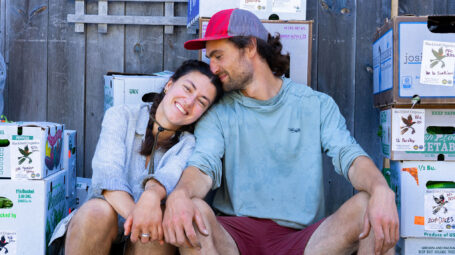
Conserving the farm was always the hope when Erika and Mark Gutel purchased the former Liebig Berry Farm in West Pawlet, VT in 2023.

“VLT helped us save this place and make sure this stays a farm forever,” says Mark.

After Erika found the farm for sale, the couple was devastated to learn it was already under contract. “What we always wanted to do was berries,” Mark explained. The farm’s 5,000 high blueberry bushes were going to be replaced by a storage complex. But they didn’t give up.

Mark called their realtor daily for a month, saying they wanted to carry on the Liebigs’ legacy and preserve the blueberry farm. Ultimately, after other offers fell through, the Gutels’ offer was accepted and they got the 100-acre farm — and a steep monthly mortgage payment.

“We were so in over our heads,” Mark says.

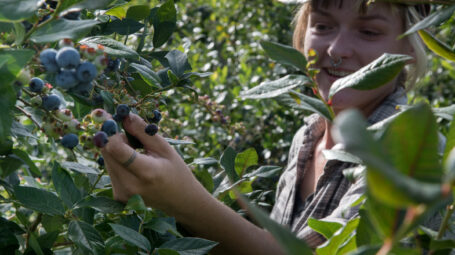
A week after buying the land, they opened u-pick at the renamed “Kinder Way Berry Farm.” Mark recalls Day One: “I open up the stand. People just come out. It’s amazing. There’s 50 to 60 cars in the parking lot.”

Conservation funding helped the Gutels pay down a good portion of their bank loan.

“It made it affordable for us, attainable,” says Mark.

Growing food, building community, nourishing families

Erika and Mark’s desire to grow food and feed people goes back more than 20 years, when they farmed in Colorado. They have decades of experience in farming and food businesses.

“Food is everything, and everything revolves around it,” says Mark. “It’s all connected.”

Today, running a longstanding berry farm, he witnesses and relishes that connection all through berry season. When asked if people come back year after year, Mark laughs: “We’ve had so many ‘thank you’s. That’s the beauty of this.”

A 65-year-old woman told Mark that she came as a child, then she brought her daughter, and now she comes with her daughter and grandkids to pick together.

“This isn’t just a berry farm: it’s an event, it’s a destination,” he says. “This isn’t just about food. This is about family, it’s generational. It’s important.”

Conservation helps sustain farming legacies

That generational quality also applies to the land and the legacy it holds from the previous farmers. Phil and Iva Leibig ran the Leibig Berry Farm for more than 40 years, growing strawberries, summer raspberries, blueberries, and then fall raspberries.

Mark says after he and Erika conserved the farm with VLT in 2025, one of the Leibig family members came by and thanked the Gutels for saving the farm.

“That was super powerful,” Mark said. “It’s not in their family anymore but they appreciated what we’ve done by conserving this land, so it will remain forever a farm. All the hard work over all those years by the Leibig family will be worth something.”

The land’s conservation ensures that the productive farmland is protected for generations to come. It also ensures that the farm will be available and affordable to future farmers.

“It’s comforting to know this place will always fall into the hands of a farmer, that all of our hard work will be worth something,” Mark added.

Becoming berry farmers, learning the land

Mark says the three years of running Kinder Way Berry Farm have been a crash course — caring for 5,000 blueberry bushes that haven’t been tended to in years, selling and marketing the berries, going to farmers markets, building wholesale accounts, and lots more.

“We’re still in the beginning stages, and we’re learning how to be berry farmers. We’re still learning our management techniques, learning the behavior of the berries in the soil, and what they do and what they don’t do.”

The three Gutel children are also involved. Their 21-year-old daughter helps out running the shop while their 18-year-old son picks berries. Mark says their youngest, a nine-year-old son, is also a great picker.

In addition to learning the berry business, the Gutels are focusing on the farm’s health. They are rebuilding the soil using cover crops, reinvigorating the blueberry plants, adding high tunnels so they can grow raspberries while better managing the risk of pests, and growing native shrubs along the Mettowee’s riverbank on the farm. A small farm animal sanctuary provides manure for compost and is an added attraction for pick-your-own customers.

They’re also boosting pollinator habitat because, as Mark says, “without bees, we don’t have a crop. So, we’re definitely working hand in hand with Mother Nature.”

A future with more berries

Mark says the future is offering strawberries, raspberries and, of course, more blueberries for picking.

“I want people to just go out, pick what they want, have a good time, explore and eat whatever they can.”

“There’s something beautiful about little kids at the stand after they’ve picked; they’re all purple. It’s awesome,” he says.

“That’s what drives us. It’s not just growing food and selling it. It’s having the families come out here.”