Choiniere Valley Farm conserves 175 acres in Franklin County
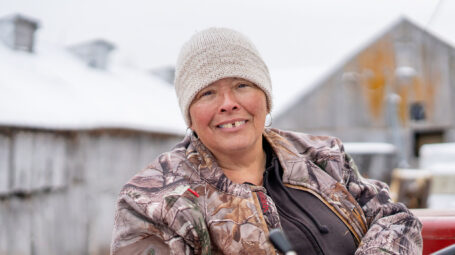
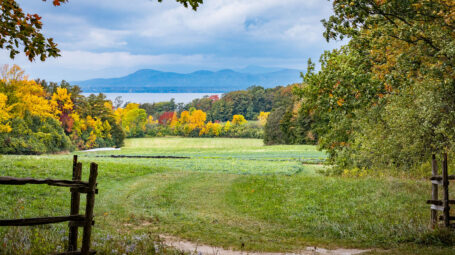
Longtime farmer Ed Choiniere conserved the 175-acre Choiniere Valley Farm in Highgate, Vermont earlier this year. He has been farming the land since the early 1990s, and now raises organic beef. Conservation will ensure that the land remains a farm for generations to come.
A lifetime of farming and a farm’s conservation
The impulse to protect the land was baked into Ed’s farming from the very beginning.
When asked why he conserved his farm, Ed said: “It goes back further than we think, to 1993, when the lady across the road approached me and asked if I wanted to farm.”
He had recently graduated high school. The then owner’s children were not interested in farming and she hoped it would remain a farm. “She wanted to find a good farmer to take over,” Ed explained. “That’s how I got started.”
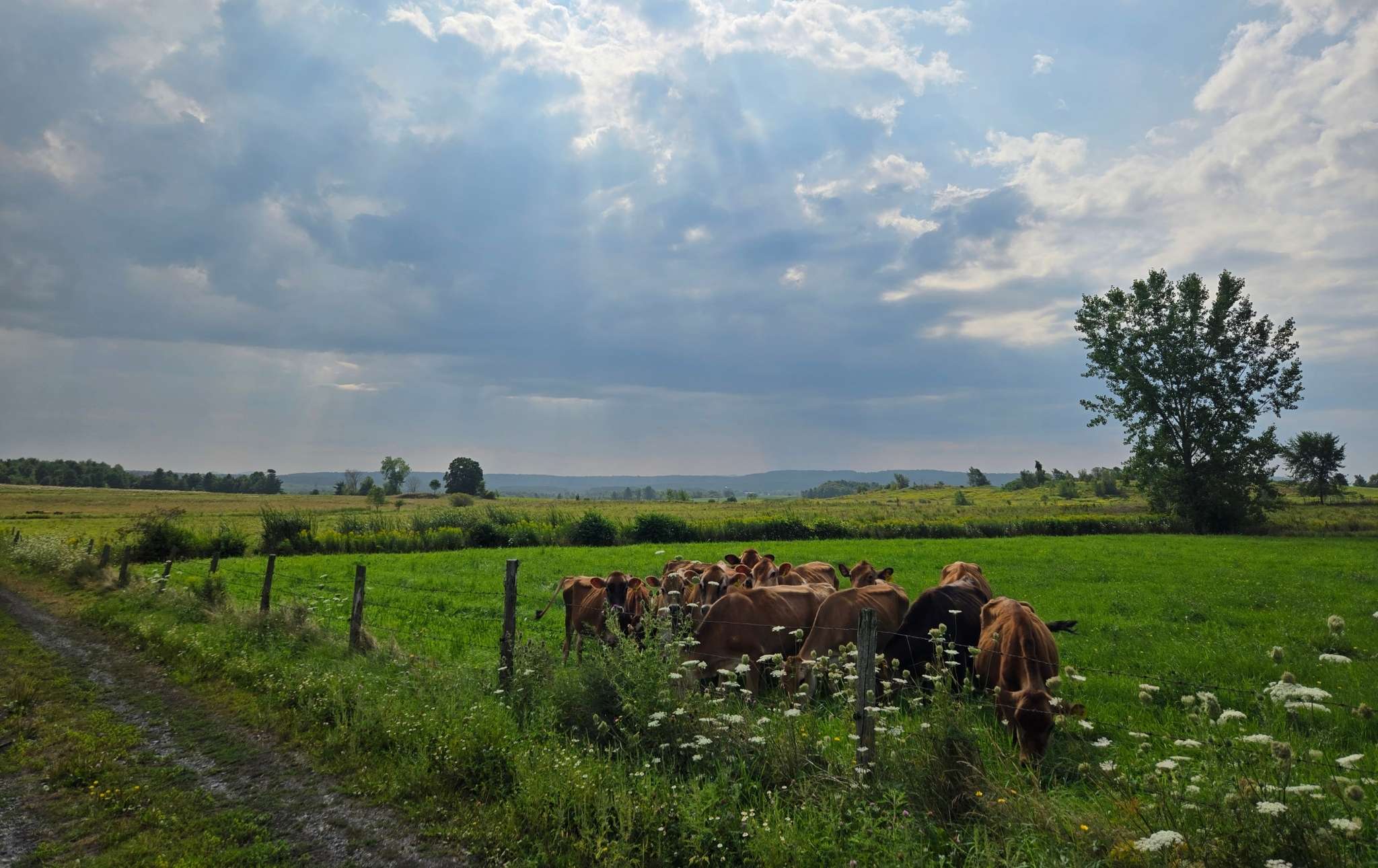
But farming wasn’t easy, especially in the early days.
Ed recalled a moment after he had made the decision to take on the land and start farming. “My father brought me here [to the farm] to meet the man who would set up a milking system. They were out talking, and I looked around at the farm and I thought, ‘Oh my god, what am I doing’.”
On the drive home that evening, Ed says his blood ran cold. “I turned to my father and I said, ‘What am I doing? Do you think I can do this?’”
“He said three words — ‘I’ll help you.’ That’s all I needed to hear.”
He also recalled his first day being a dairy farmer. “The first day was my worst day. Nothing worked. The cows didn’t like me. It took five hours to milk twenty cows.” He wondered if he’d made a mistake.
But Ed stuck with it for decades and farmed largely on his own: learning the ropes, building up his dairy business, and milking organic dairy cows.
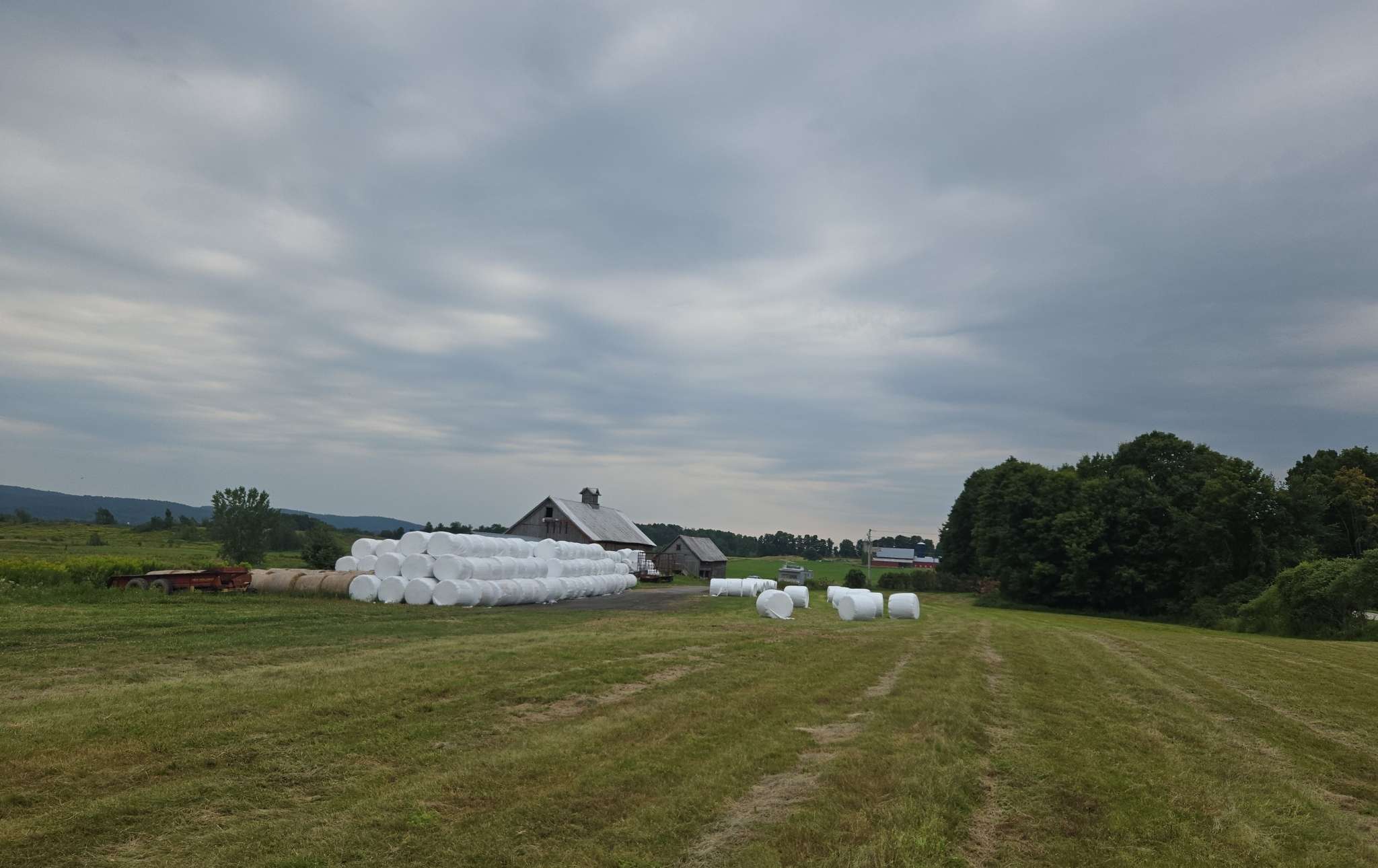
Today, Ed is proud of what he has built.
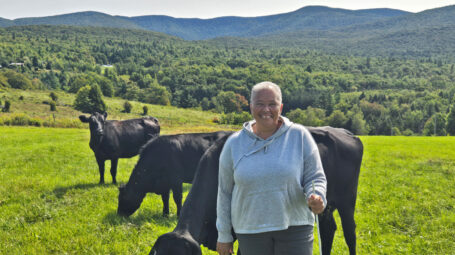
A few years ago he sold his dairy herd and moved on to the next phase in his farming journey. He now raises organic, grass-fed beef that he sells to a market in Pennsylvania. He also does custom grazing and, in the winter, custom boarding for other farmers. He hays his farm — first cut and second cut — and that provides enough feed for all his animals for the whole year.
All the farmland is in pasture or perennial hay. He uses rotational grazing to reduce pressure on pastures and follows best practices for nutrient management and manure spreading. These approaches support soil health and help protect water quality.
The property’s conservation was made possible by grant funding from the Vermont Housing and Conservation Board and USDA’s Natural Resources Conservation Service.
“This is forever”
Thinking back to where his farming, and conservation, journey began, Ed said, “Even after I bought it, I knew I weren’t gonna develop it.”
“This little square farm been broken up enough. Now this little square farm is here for anyone, after me, to come do whatever they want to do — farm, beef, crop the land.”
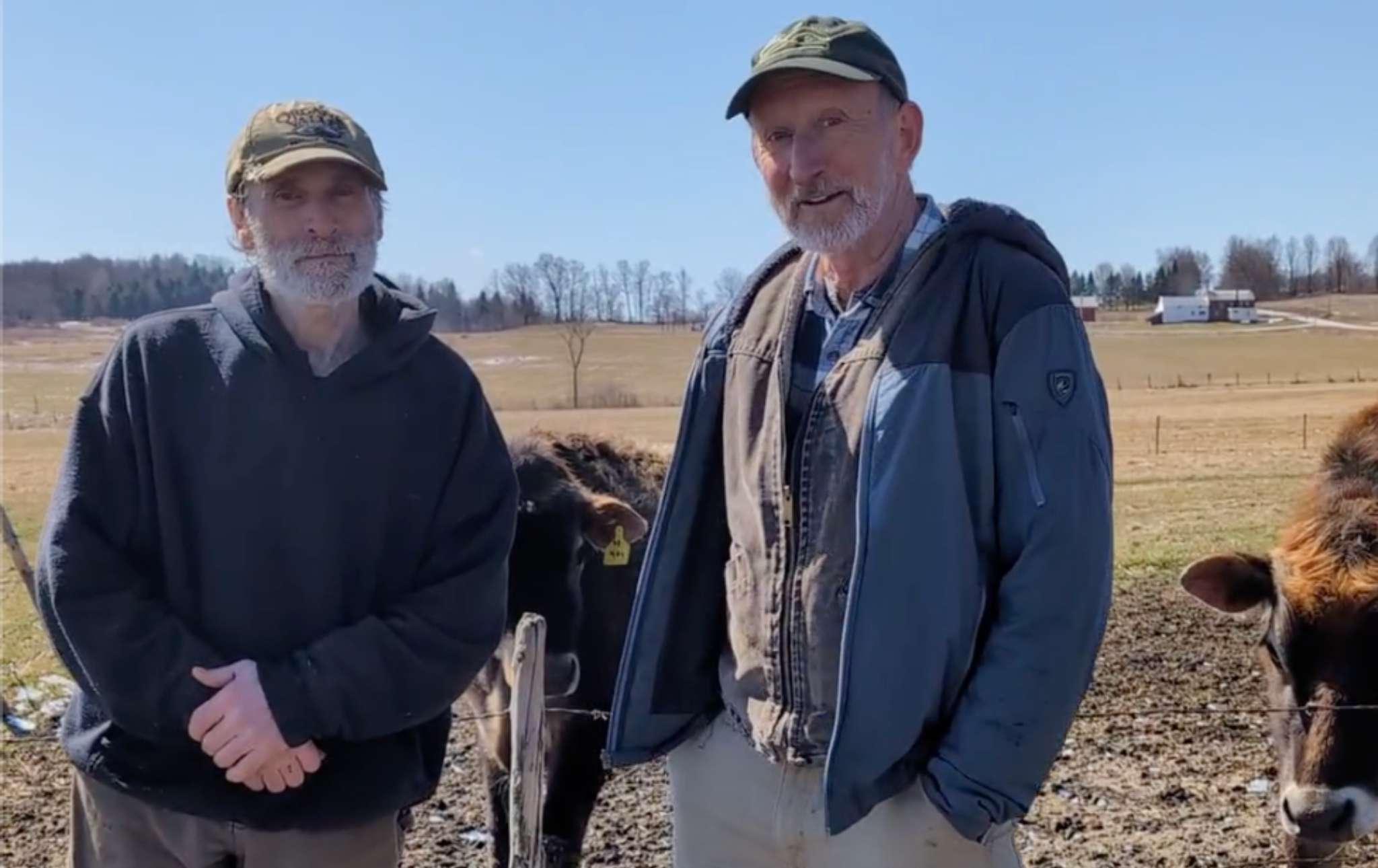
Ed Choiniere (left) with VLT’s Al Karnatz (right) at Choiniere Valley Farm.
VLT project director, Al Karnatz, worked with Ed to place a conservation easement on the land, protecting productive farmland, managed woods, and wetlands. Choiniere Valley Farm is his 400th farm conservation project. Over 32 years, Al has helped protect nearly 88,000 acres of farmland across the Champlain Valley, supporting the region’s agricultural backbone.
Some of those projects take years to complete, but the benefits add up — for individual farmers, for Vermont’s working lands economy, and for the wider landscape.
“It’s the outcome at the end that matters,” reflected Al. “Seeing properties like Ed’s, and seeing that this is forever. This is something that’s going to last long after Ed and I.”