Trees from VLT’s King Farm will help restore Ottauquechee riverbank along Route 4
Over 70 trees from King Farm will help stabilize the banks of the Ottauquechee River, less than a mile downhill, along Route 4 in Woodstock. Our forestry team managed the tree harvest at the 154-acre property. The trees will be used this summer to restore and strengthen the eroding riverbank, providing natural protection to reduce erosion, slow down and filter water during high-flow events, and provide cover and habitat for fish.
The use of wood sourced so close to the river restoration site dramatically reduces transportation carbon emissions and models climate‑smart conservation.
VLT lead forester Pieter van Loon worked with Ben Canonica of Canonica Landworks of Chelsea, Vermont on the tree harvest. Pieter marked suitable trees and managed the harvest on the basis of an ecological forest management plan for King Farm.
“We are proud to support this river restoration project on the Ottauquechee River right below VLT’s first headquarters, the King Farm,” said Pieter. “This collaboration shows yet another way conserved lands can help communities adapt to the changing climate.”
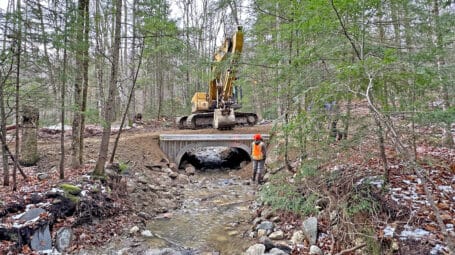
Ben harvested the trees over a period of two weeks in March. The trees were dug on three sides, tipped over, and their root clusters or rootwads gently cleaned. We are storing the river-bound trees at King Farm until the restoration project’s implementation. The river restoration project is being led by the Connecticut River Conservancy and will be executed by Canonica Landworks.
“These trees will continue to provide environmental benefits in Woodstock for years to come, including reducing nitrogen runoff into the Ottauquechee River,” said Ron Rhodes, Director of Programs at the Connecticut River Conservancy. “And we were thrilled to be able to partner with VLT to source the trees locally for the project.”
Header photo: L to R, VLT forester Pieter van Loon and Ben Canonica of Canonica Landworks during the tree harvest at King Farm, Woodstock, March 2026.
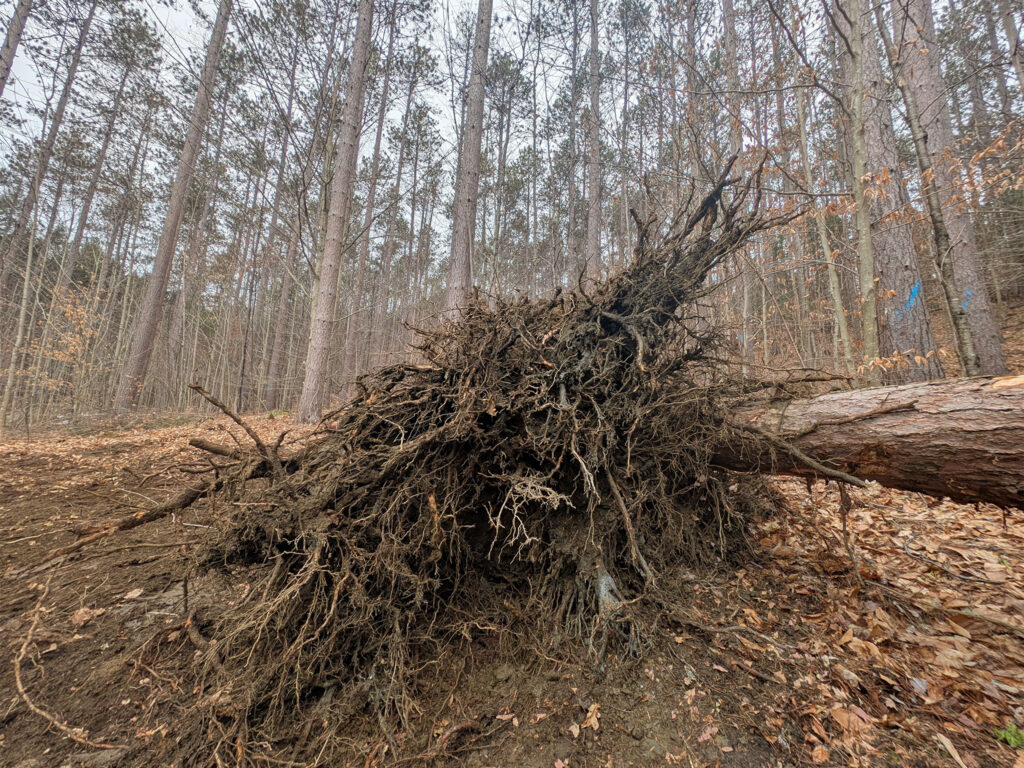
A harvested tree with rootwad that will be part of the Ottauquechee River restoration project.
How trees help rivers: Adding woody material to streambanks reduces erosion and boosts flood resilience
Trees from sustainable harvests can strengthen weakened streambanks and make our waterways healthier and more resilient.
The cluster of roots, known as rootwads, along with about 20-25 feet of trunk are used. The trunks are anchored into the riverbank so that only the rootwads are in the water.
The rootwads then trap sediment and debris, slow water flow, and provide habitat for fish and other aquatic organisms.
The decomposing trunks nourish shrubs and trees growing back along the bank over time. The resulting vegetated bank will be stronger and more resilient against erosion and rising waters.
Our restoration team is planning these kinds of streambank restoration projects in other parts of the state to build resilience, at the local level, to more intense rainstorms and floods.
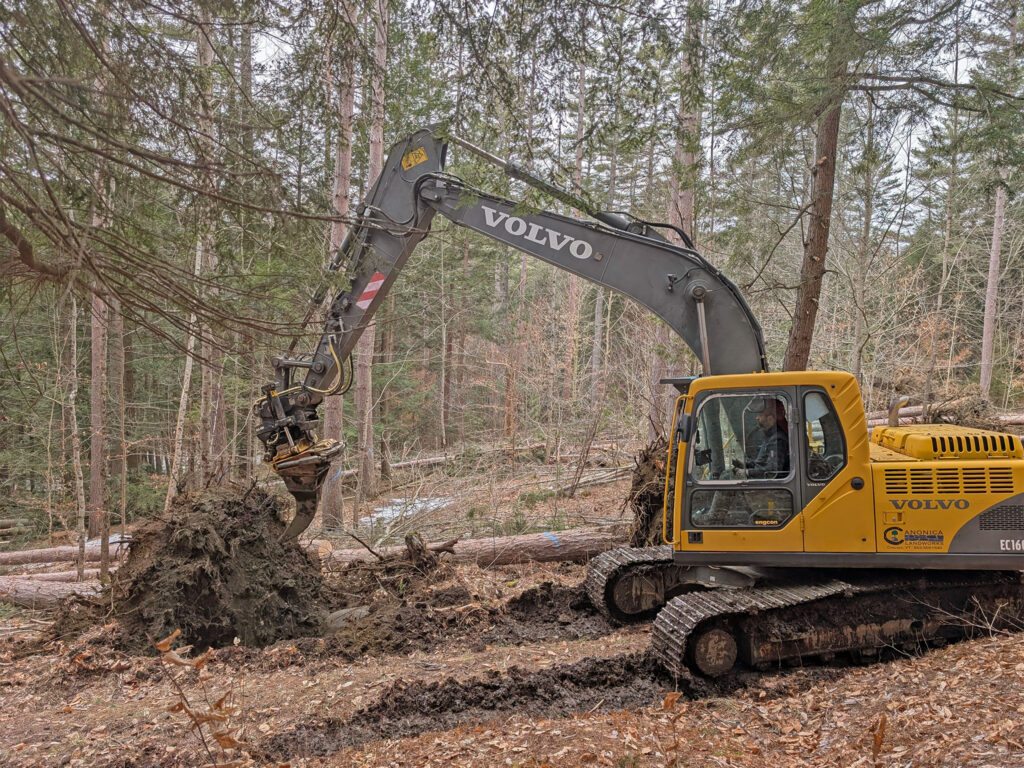
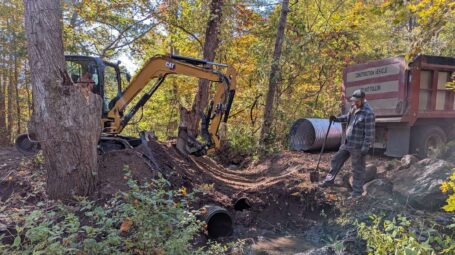
Ben Canonica operating an excavator with a front claw attachment to pull up root clusters of trees while keeping the tree intact, for use in the river restoration project down the hill.
Sustainable harvest will also benefit forest health and other restoration projects
King Farm is a historic farm property that was donated us and that we own and manage for ecological and community benefits.
This harvest is part of a long‑planned forest management project of its many acres of woodland, to create space in old plantations of red pine and Norway spruce so that native trees that can thrive on this hillside can return. Red pine, though native to Vermont, is not regenerating here because the site is not favorable for the species.
VLT monitored each phase of the project to protect water quality, vernal pools, and soil health during the harvest.
We will harvest additional trees in the coming months to complete the planned forest management. Much of the pine and spruce removed will be milled right on the property for the renovation of King Farm’s historic main barn and outbuildings at a future date.
Pieter explained: “It may cost more than buying commercial lumber, but it ensures we know exactly how and under what conditions the wood was harvested — demonstrating the power of local, sustainable materials.”
“As with so many Vermont hill farms, the existing barns were probably built with wood that was harvested from the property, so using our own wood reflects and honors this tradition,” he added.