Can't find what you're looking for? Please contact us.

Vermont’s vibrant fall wildflowers

11 min read / September 11, 2026 / By Sarah Wolfe

Striking beauty for the bees and more

While fall foliage often steals the spotlight, another group of plants provides jaw-dropping colors at the end of the growing season: fall wildflowers. Whether in your gardens, along the road, or in meadows, late-season bloomers provide essential nutrition when few other flowers are in bloom.
The role of wildflowers

As the days shorten, fall wildflowers provide nectar and pollen for insects preparing for winter. Their seeds are food for birds as they prepare to migrate or weather the colder months.

Many also have a long history of use by indigenous communities. Some have medicinal uses, others can be eaten or used as dye. Their historical and present-day uses remind us of the deep connection between people and the land.

Here are identification tips for some of these fall superheroes.

Credit Kent P. McFarland

Canada goldenrod (Solidago canadensis)

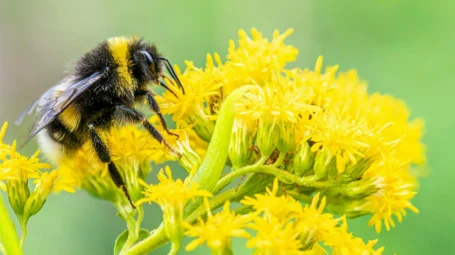
Goldenrod is one of the most recognizable wildflowers in the state. Its tall, bright yellow clusters add a burst of color between mid-August and September. Canada Goldenrod is one of the most widespread of the twelve species found in Vermont.

  • Where it grows: Canada goldenrod grows to six feet tall, helping it stand out in meadows, fields, and the edge of roads with at least partial sun and well-drained soils. While it prefers moist soils, goldenrod is drought-tolerant.
  • Ecology: Goldenrod is a vital food source for bees and butterflies, and a host plant for caterpillars. It’s considered a “powerhouse plant” for its outsized contribution to ecosystem health.
  • Cultural use: People use goldenrod in teas and flower arrangements. Some Indigenous peoples also use it medicinally, including as a wound salve to treat wounds and a sore-throat remedy. The bright yellow flowers can produce a natural dye.
  • Little-known fact: Goldenrod is often mistakenly blamed for hay fever, but its heavy pollen is not airborne. Ragweed, which blooms at the same time, is the more likely culprit.

New England aster (Symphyotrichum novae-angliae)

A relative of the daisy, the New England aster has vibrant purple flowers with yellow centers. Spot its bright blooms from late August through October.

  • Where it grows: Aster thrives in fields, fencerows, lakeshores, wet meadows, and roadside edges, in full sun to part shade.
  • Ecology: Bees, butterflies, caterpillars, birds, and mammals feed on different parts of the aster. Like goldenrod, asters are considered “powerhouse plants” for their ecological value.
  • Cultural use: Some indigenous peoples use asters ceremonially and medicinally, including in treatments for headaches, congestion, fever, stomachaches, and mental illness.
  • Little-known fact: The flowers are edible, and people often use them decoratively in salads or baked goods.
Credit Erin Talmage

Meadow bottle gentian (Gentiana clausa)

These striking blue flowers are a rare treat in Vermont. Their tightly closed flowers resemble tulip buds and never fully open, hence the name “bottle.” Of Vermont’s three native gentian species, meadow bottle gentian is the most commonly seen.

  • Where it grows: Wetlands and other moist, open areas provide habitat for gentians.
  • Ecology: Bumblebees are gentians’ primary pollinators. Their size allows them to force open the closed flowers to reach the nectar and pollen inside. White-tailed deer often browse the plants before they flower.
  • Cultural use: Gentian roots have long been used in herbal medicine and to flavor bitters and aperitifs. They can also be used to make a yellow dye.
  • Little-known fact: Gentians are named for King Gentius of Illyria, who was credited with discovering the medicinal properties of one species.
Credit Holly Young

Spotted Joe-Pye weed (Eutrochium maculatum)

This dramatic plant produces umbrella-like clusters of pinkish-purple flowers atop long stems of whorled leaves. Its spotted green and purple stems grow four to eight (or even 10) feet tall! It attracts a wide variety of pollinators, including monarch butterflies.

  • Where it grows: Typically found in wet meadows, marshes, and along stream banks, spotted Joe-Pye weed thrives in moist, rich soils with partial to full sun.
  • Ecology: The flowers attract butterflies, bees, caterpillars, and other beneficial insects (it’s a host plant for more than 36 species of moth and butterfly caterpillars).
  • Cultural use: Some Indigenous cultures use it medicinally as a tea to treat fevers, kidney issues, and other ailments.
  • Little-known fact: Joe-Pye weed may be named after a Native American named Joseph Shauquethqueatoe Pye, a Mohican leader who was said to use the plant to treat fevers and other illnesses.
Credit scibadger on iNaturalist.

Autumn sneezeweed (Helenium autumnale)

Despite its name, sneezeweed does not cause allergies. As with goldenrod, its pollen is too heavy to be carried in the wind, and insects pollinate it. Its blooms resemble small sunflowers, with golden petal-like rays encircling a raised central dome of tiny tubular flowers.

  • Where it grows: Autumn sneezeweed is often seen in wet meadows and alongside streams.
  • Ecology: The bright flowers attract bees and butterflies. Sneezeweed serves as a host plant for several caterpillars, including the painted lady butterfly.
  • Cultural use: Cherokee and other Native American groups dry the leaves, pulverizing and inhaling them to cause sneezing for relief of congestion or headaches. Hence the name, sneezeweed.
  • Little-known fact: Though related to asters, all parts of the plant are poisonous to humans. Its bitter foliage also discourages browsing by deer and other mammals.

American witch hazel (Hamamelis virginiana)

A unique native tree that flowers in the fall, American witch hazel is known for its spidery yellow blooms that appear after most other plants have lost their leaves.

  • Where it grows: This shade-loving shrub or small tree can be found in forests and along streams.
  • Ecology: Witch hazel blooms when many pollinators have already gone dormant. It is pollinated by owlet moths, late-season bumblebee queens, and other insects.  Some birds and small mammals eat the seeds, which can be launched up to 30 feet from the tree!
  • Cultural use: Indigenous peoples were the first to use the bark and leaves medicinally. Today, witch hazel extract is a common ingredient in skincare products.
  • Little-known fact: Its name may come from the practice of “water-witching,” or dowsing for underground water sources with forked branches.

Jerusalem artichoke (Helianthus tuberosus)

A sunflower relative, the Jerusalem artichoke (or sunchoke) brightens roadsides with its yellow blooms. While the plant has no connection to either Jerusalem or the artichoke family, its underground tubers are edible and can be prepared similarly to potatoes.

  • Where it grows: Common along roadsides and riverbanks, Jerusalem artichokes can spread aggressively. They will regrow from even a small piece of their tuber.
  • Ecology: Flowers attract native bees, while deer eat the foliage and tubers. Squirrels, birds, and chipmunks eat the seeds.
  • Cultural use: Native Americans have long eaten the potassium-rich tubers. The plant was eventually brought to Europe, where a mispronunciation of the Italian word girasole (sunflower) and a taste that recalled artichokes earned it the name Jerusalem artichoke.
  • Little-known fact: Researchers have studied these tubers for their high inulin content and potential benefits for blood sugar management.
Credit Fen Levy-O'Malley

Virgin’s bower (Clematis virginiana)

This climbing vine produces delicate white flowers in late summer and early fall. Though beautiful, it can sometimes overtake other plants.

  • Where it grows: Virgin’s bower is commonly found climbing fences or shrubs at woodland edges, roadsides, hedgerows, and along streambanks, often in partial to full shade.
  • Ecology: Its fragrant flowers attract bees, butterflies, and hummingbirds. The fluffy seed heads persist into winter and can provide cover for birds.
  • Cultural use: Indigenous people have used the plant medicinally, and some may have used it to induce hallucinatory dreams. Please note that all parts of the plant can cause skin irritation and are considered poisonous.
  • Little-known fact: Virgin’s bower also goes by old man’s beard (for its seed tufts) and devil’s darning needles (for its spindly flowers).

Jewelweed (Impatiens capensis)

Jewelweed’s seed pods explode at the slightest touch, earning it the nickname “touch-me-not.” This self-seeding annual spreads readily in moist soils, where it can form dense stands. Given the right conditions, jewelweed can even outcompete garlic mustard, a highly competitive introduced species.

  • Where to find: Jewelweed thrives in wetlands, ditches, and along streams in shady areas.
  • Ecology: Jewelweed’s orange and yellow flowers are a favorite of hummingbirds and bees.
  • Cultural use: Indigenous peoples have used juice from the crushed stems to treat skin irritations, including poison ivy and nettle rashes.
  • Little-known fact: Jewelweed plants grow two types of flowers: small, closed flowers that self-pollinate, and open flowers that are pollinated by hummingbirds and bees.