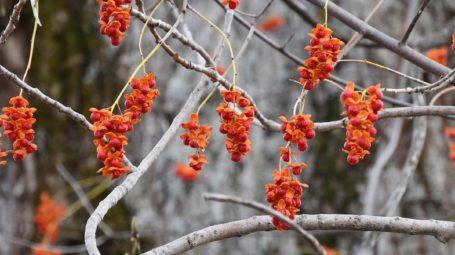
Vermont’s vibrant fall wildflowers
11 min read / September 11, 2026 / By Sarah Wolfe

Our website uses cookies to improve your experience. To learn more about how we use cookies, please review our privacy policy.
Can't find what you're looking for? Please contact us.
11 min read / September 11, 2026 / By Sarah Wolfe
While fall foliage often steals the spotlight, another group of plants provides jaw-dropping colors at the end of the growing season: fall wildflowers. Whether in your gardens, along the road, or in meadows, late-season bloomers provide essential nutrition when few other flowers are in bloom.
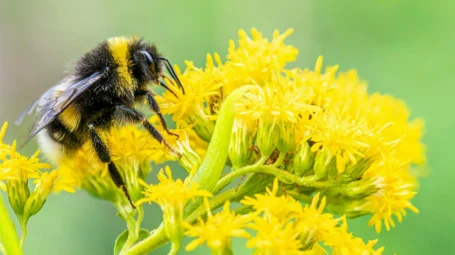
As the days shorten, fall wildflowers provide nectar and pollen for insects preparing for winter. Their seeds are food for birds as they prepare to migrate or weather the colder months.
Many also have a long history of use by indigenous communities. Some have medicinal uses, others can be eaten or used as dye. Their historical and present-day uses remind us of the deep connection between people and the land.
Here are identification tips for some of these fall superheroes.
Goldenrod is one of the most recognizable wildflowers in the state. Its tall, bright yellow clusters add a burst of color between mid-August and September. Canada Goldenrod is one of the most widespread of the twelve species found in Vermont.
A relative of the daisy, the New England aster has vibrant purple flowers with yellow centers. Spot its bright blooms from late August through October.
These striking blue flowers are a rare treat in Vermont. Their tightly closed flowers resemble tulip buds and never fully open, hence the name “bottle.” Of Vermont’s three native gentian species, meadow bottle gentian is the most commonly seen.
This dramatic plant produces umbrella-like clusters of pinkish-purple flowers atop long stems of whorled leaves. Its spotted green and purple stems grow four to eight (or even 10) feet tall! It attracts a wide variety of pollinators, including monarch butterflies.
Despite its name, sneezeweed does not cause allergies. As with goldenrod, its pollen is too heavy to be carried in the wind, and insects pollinate it. Its blooms resemble small sunflowers, with golden petal-like rays encircling a raised central dome of tiny tubular flowers.
A unique native tree that flowers in the fall, American witch hazel is known for its spidery yellow blooms that appear after most other plants have lost their leaves.
A sunflower relative, the Jerusalem artichoke (or sunchoke) brightens roadsides with its yellow blooms. While the plant has no connection to either Jerusalem or the artichoke family, its underground tubers are edible and can be prepared similarly to potatoes.
This climbing vine produces delicate white flowers in late summer and early fall. Though beautiful, it can sometimes overtake other plants.
Jewelweed’s seed pods explode at the slightest touch, earning it the nickname “touch-me-not.” This self-seeding annual spreads readily in moist soils, where it can form dense stands. Given the right conditions, jewelweed can even outcompete garlic mustard, a highly competitive introduced species.
We generally send two emails per month. You can unsubscribe at any time.