Can't find what you're looking for? Please contact us.

How to find spring wildflowers and woodland ephemerals in Vermont

5 min read / April 6, 2026 / By Sarah Wolfe

Wildflowers emerge from the last patches of snow like tiny promises of spring, returning color to the forest before the trees unfurl their leaves. Here’s how to find Vermont’s earliest blooms and learn more about the conditions they need to thrive.

Header photo: Bunchberry flowers, taken by Roger Irwin.
Where to go to find wildflowers

Northern Hardwood Forests

Vermont’s most widespread forest type, Northern Hardwood Forests are dominated by sugar maple, beech, and yellow birch. These trees blanket hills across the state, though they are less common in the Champlain Valley and lower elevations in southern Vermont. The sunny forest floor in early spring supports abundant trout lily, spring beauty, and red trillium.

Photo: Trout lily.

Limestone Forests

In the Champlain Valley, shallow soils over calcium-rich rock support Limestone Forests, often dominated by oak and maple trees. The forest floor boasts species such as bloodroot, hepatica, trillium, and blue cohosh.

Photo: White trillium, which fades to pink as it ages.

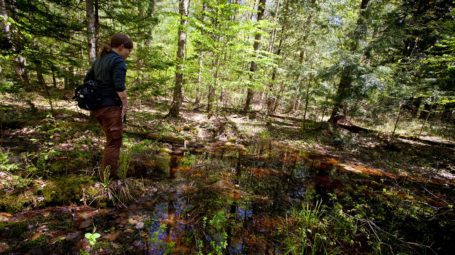
Moist woodland edges and seepage zones

Wet areas at forest edges become mineral-rich from groundwater seepage, nourishing water-loving species. Foamflower, golden saxifrage, bunchberry, and blue cohosh occur in these cool, moist areas.

Photo: Foamflower, taken by Roger Irwin.

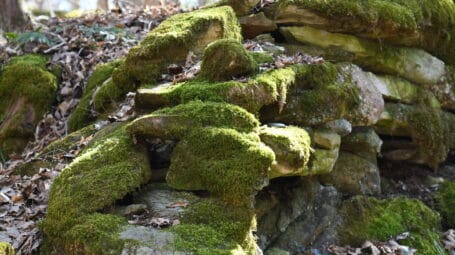
Calcareous ledges and rocky outcrops

Calcareous cliffs are composed of calcium-rich stone, such as limestone, marble, dolostone, or calcareous schist. These rocks weather quickly, allowing soil to develop in cracks and ledges. The ledges warm early in the season, providing a welcoming environment for wild columbine, herb robert, and early saxifrage.

Photo: Wild columbine, taken by Roger Irwin.

A note on jumping earthworms

If you are seeing less leaf litter in the forest, invasive jumping worms may be present. These aggressive earthworms devour the forest’s nutrient-rich loam, making it harder for some wildflowers and forest wildlife to thrive.

Ephemeral or not?

You might have heard the term “spring ephemeral” to describe many wildflowers. True spring ephemerals leaf out, bloom, set seed, and disappear entirely by early summer. Trout lily, spring beauty, wild leek, Dutchman’s breeches, and squirrel corn are classic examples. Many other spring wildflowers show leaves throughout the season, or even bloom again later in the year.

When to see which flowers?

Early spring (March-April)

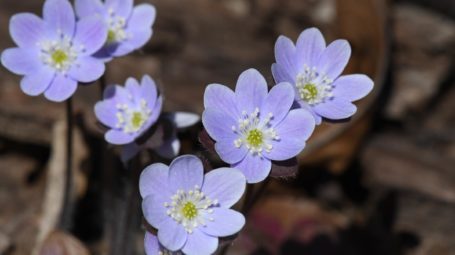
Shortly after snowmelt, look for hepatica, bloodroot, coltsfoot, and early saxifrage in sunny, nutrient-rich sites.

Photo: hepatica

Mid-spring (late April-May)

This is peak spring wildflower season. Expect trilliums (white, red, and painted), trout lily, columbine, spring beauty, foamflower, golden saxifrage, early meadow rue, and blue cohosh.

Photo: spring beauty, taken by Roger Irwin

Late spring (late May-June)

As the canopy closes, look to roadsides, moist edges, and ledges for later bloomers like  herb robert, bishop’s cap, bunchberry, and goldthread. Many of these species will flower into summer.

For more detail on how to identify some of the most common or rewarding spring wildflowers, see our guide to identifying spring wildflowers.

Photo: bunchberry, taken by Roger Irwin

Please enjoy responsibly

Many spring wildflowers are fleeting and rare — bright spots amidst a grey-brown landscape. Some wildflowers take many years to produce a single flower, like red trillium and lady’s slippers. To ensure wildflowers can grow and spread, please take pictures but don’t pick.

You never know what’s hiding under leaf loam. Stay on forest trails when possible to avoid stepping on a fledgling flower that hasn’t yet emerged.

Plan your next adventure

If the timing is right, these conserved properties or town forests around Vermont feature the habitats described above. Plan a visit to soak in some beauty this spring:

Photo: coltsfoot, taken by Roger Irwin.